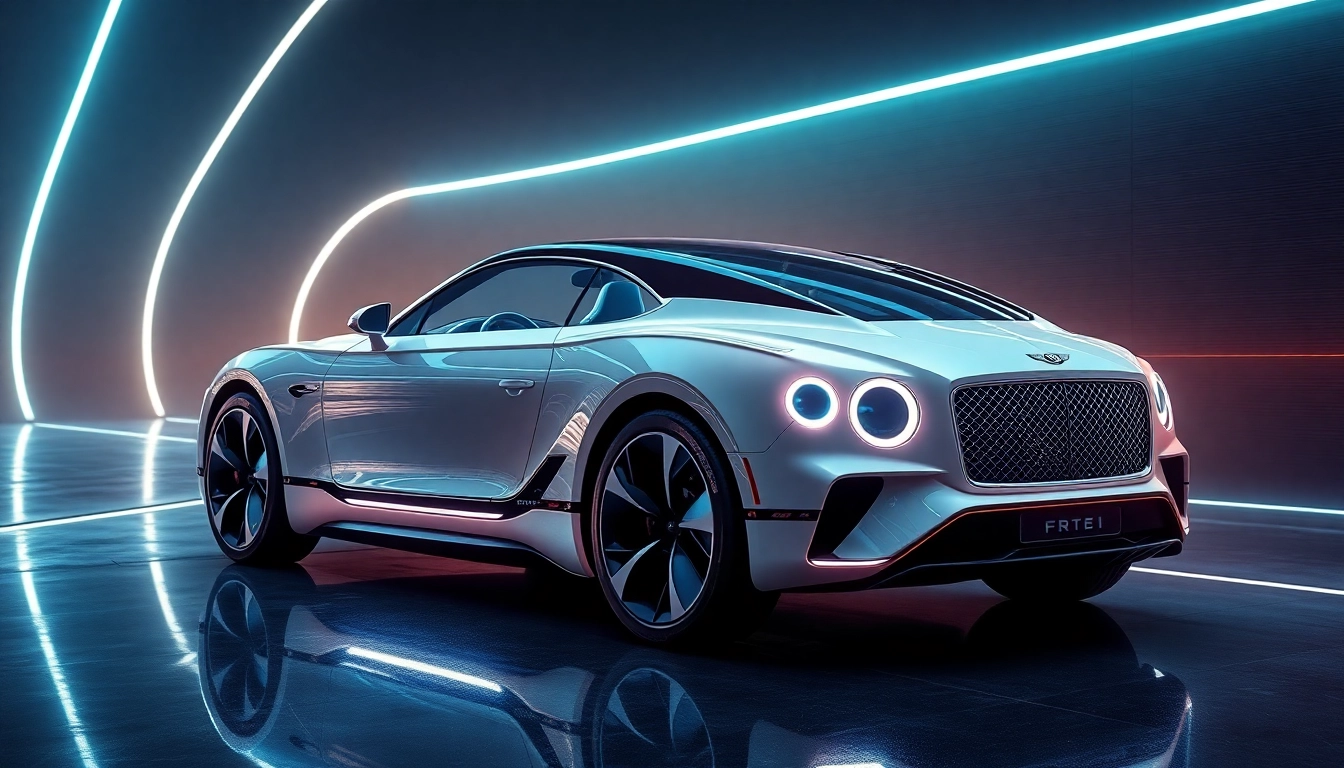
Bentley Reveals Its First Electric Car: Torcal Arrives September 2026
Bentley has officially named its first fully electric vehicle: the Torcal. The British marque confirmed the name alongside a teaser image of the EV’s rear, promising a full reveal on 23 September 2026. This marks Bentley’s first-ever full electric car. While detailed specs remain under wraps until the official reveal, Bentley has confirmed the 5-meter-long SUV will have a range of more than 300 miles.
Name and Heritage
The name Torcal was already anticipated by Bentley watchers after filings earlier this year showed Bentley had registered both “Torcal” and “Barnato” in Europe and the UK, covering motor vehicles including electric cars, charging cables, and charging stations. “Barnato” – a nod to 1920s Bentley obsessive and racing driver Woolf Barnato – was tipped as the front-runner, but Bentley chose the other option. Like previous Bentley models, the Torcal name comes from a natural landmark: Torcal de Antequera in Andalusia, Spain, a limestone landscape of stacked rock formations. Conveniently, the word Torcal also derives from the Latin torquere, meaning “to twist,” which is the origin of the word torque—describing rotational force.
Design and First Impressions
WIRED was invited to a secret reveal of the Torcal near Bentley’s headquarters in the UK. The new electric SUV is similar to the Bentayga, with obvious lineage. The Torcal is slightly smaller, featuring the signature long hood and upright front. Bentley’s familiar rear haunches over the wheel arches are present, though perhaps not as well resolved as on the Bentayga. The vehicle is an attractive, powerful, and purposeful-looking SUV with a switchable glass sunroof and new light clusters. The rear lights differ significantly from the Bentayga—moving from the familiar oval shape to a clean line. Unlike the Bentayga, the roofline at the rear drops down, a common aerodynamic design to reduce drag and increase range.
Front Grille and Interior
At the front, the most striking visual element is the new grille: ventilation to a radiator is replaced by a solid wall of illuminated crystals, with a design apparently influenced by the face of the Continental T. It is a bold, deliberately unsubtle touch, far from the move towards minimalist EV designs. Inside, thanks to all-round power doors, Bentley’s designers have incorporated switchgear for important functions alongside OLED screens. The central display curves downwards in a manner similar to that of the Bentayga. Notably, Bentley has not followed other high-end manufacturers in offering a separate passenger screen, and there will be no option for this.
The Challenging Luxury EV Market
Bentley chairman and chief executive Frank-Steffen Walliser calls the Torcal “the most considered car” in Bentley’s history—and it will need to be. The EV arrives at possibly the worst moment to date for selling a premium electric car. Lamborghini canceled its EV this year after CEO Stephan Winkelmann concluded demand among its buyers is “going almost to zero, if not to zero.” Fisker’s Luce tanked the company’s market value within hours of its reveal in Rome, and Ferrari has pushed its second electric model back to 2028. Mercedes-Benz sold 564 electric G-Class models in Europe through April 2025, against 9,700 for the combustion version. Audi discontinued the Q8 E-tron after closing its Brussels plant, citing a “global decline in customer orders in the electric luxury class segment.”
Porsche and Broader Market Struggles
Then there is Porsche, Bentley’s stablemate inside Volkswagen Group. The Taycan’s depreciation is so severe that some dealers have supposedly refused to take their own brand’s performance EV as a trade-in. Porsche’s 2025 results show group operating profit collapsing 93 percent to €413 million, dragged down by a €3.9 billion writedown tied to reversing its EV strategy. Macan EV sales are down by 44 percent. Mercedes’ EQS SUV is down by about the same. This is the rocky state of the luxury EV market Bentley wants to enter with the Torcal.
Bentley’s Strategy and Financial Position
Compared to many other luxury EV makers, Bentley is seemingly doing OK, though only relatively. In March, Bentley reported its seventh consecutive year of profitability: €216 million in operating profit on €2.6 billion of revenue, an 8.3 percent return on sales. However, this is a 42 percent fall compared with a year earlier. Bentley is self-funding the conversion of its historic A1 building in Crewe, England, into a battery electric assembly line, alongside a new design center and paint shop. It has also, more quietly, cut jobs to fund that transition, and Chinese demand is falling for Bentley, as with other Western brands.
Hedged EV Ambitions
Bentley has already hedged its EV bet. In 2024, months after Walliser joined, it pushed its target for going fully electric from 2030 to 2035 under a renamed Beyond100 Plus strategy. It plans to keep selling plug-in hybrid and combustion models alongside the Torcal. A second all-electric Bentley is not expected before 2030. Walliser noted, “Technology seekers that consider themselves opinion makers wanted cars that looked different… Now people don’t want that. They just want to have a car, and this is why our timing maybe now is right. Using all of our DNA, being careful, delivering the car that feels authentic—don’t try to play anymore.” He added, “It’s an evolution of the brand, and I think it’s the right thing for Bentley to do—not look for revolutions.”
Hope for the Torcal?
While the luxury EV market is challenging, there is cause for optimism, especially regarding China. Ferrari’s deeply controversial first EV, the Luce, may have been poorly received in the West, but reports indicate that in China, the 1,035 hp Luce – with a sticker price of $586,600 – received an altogether different reception. The country’s entire first-year allocation of 88 units was reportedly snapped up almost instantly. Bentley and Walliser will no doubt be hoping the Torcal gets a similar reception.